Toyota Katashiki Code 💎
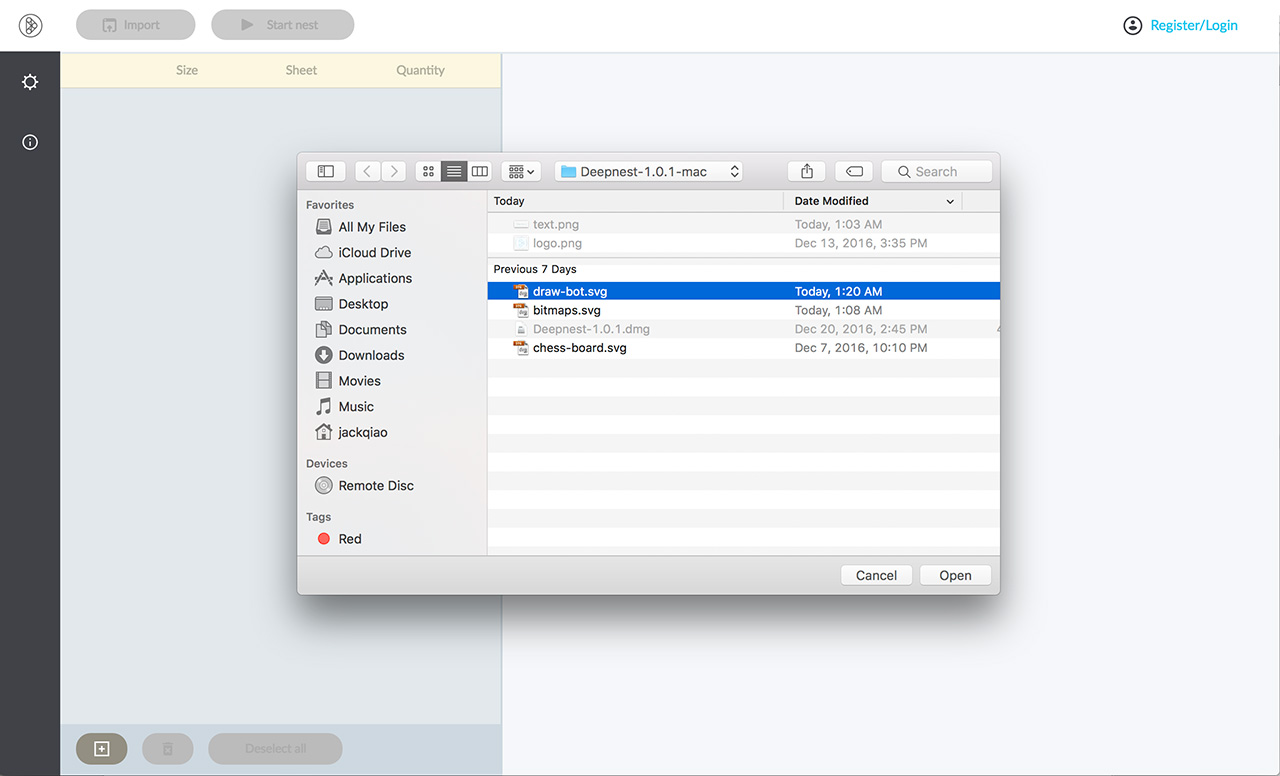
1. Import your file

2. Mark the largest part as your sheet, then hit start
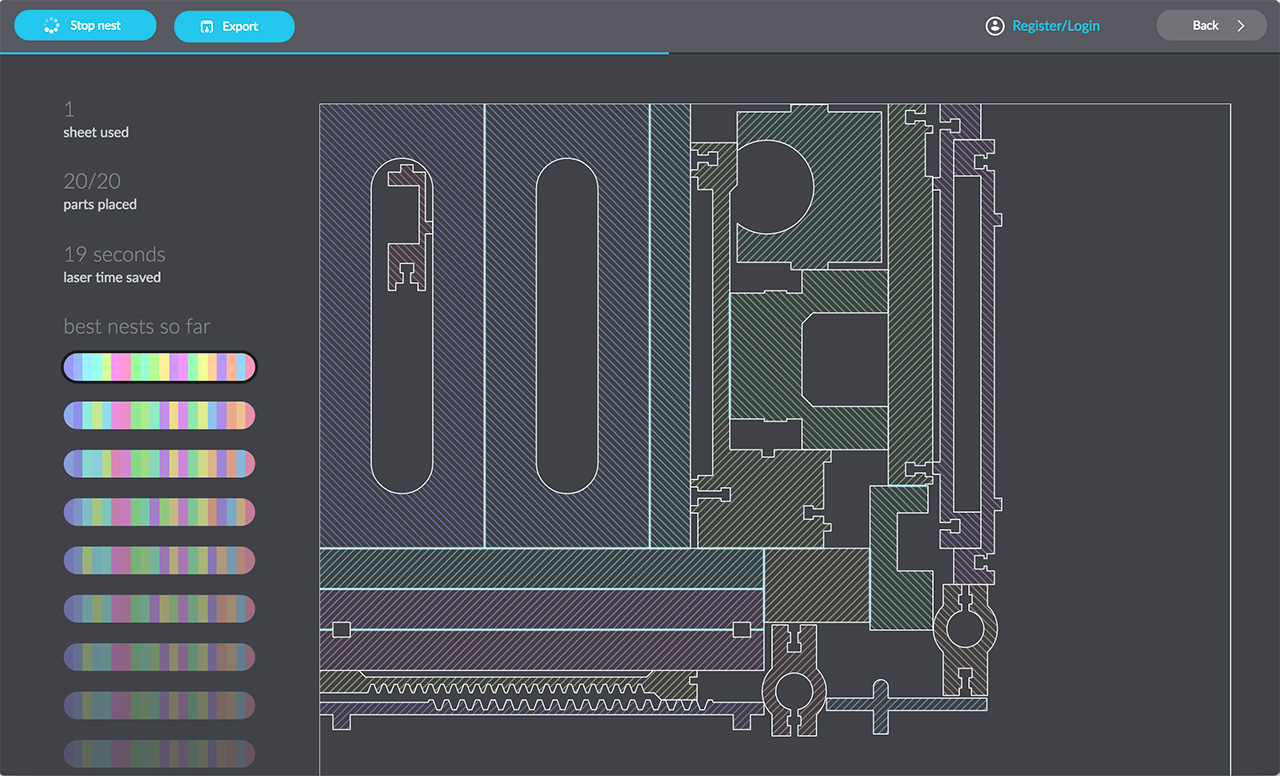
3. Deepnest will continue to search for better solutions until you hit stop
Deepnest is an open source nesting application, great for laser cutters, plasma cutters, and other CNC machines.
This paper examines the Toyota katashiki code system: its structure, history, application across vehicle models, decoding methodology, data patterns, practical uses (parts ordering, diagnostics, fleet management), and limitations. It synthesizes public documentation, industry practice, and examples to provide a comprehensive reference for engineers, parts specialists, and researchers.
In an internal Toyota benchmarking study (2019, unpublished), two groups of newer workers were tested on anomaly insertion:
This guide explains the structure, location, and interpretation of Toyota Katashiki codes. toyota katashiki code
This is the most recognisable part of the code. For example, in the code
Katashiki code is Toyota’s internal nomenclature for a specific vehicle configuration. While a VIN identifies a unique individual car, the Katashiki code identifies a "type" or "flavor" of a model by detailing its engine, transmission, body style, and steering position. Structure of the Katashiki Code Toyota Katashiki Code — Long Paper Abstract This
The term Katashiki (型式) literally translates from Japanese as "model" or "product type". In Toyota's internal and service systems, it refers to a group of vehicles that share the same core descriptive factors and classifications, such as generation, engine family, and body style.
For enthusiasts, the Katashiki is proof of a car's pedigree, confirming whether a vehicle is a genuine high-performance trim or a base model with aftermarket parts. Global Tracking: Empirical Illustration: The Motomachi Assembly Line In an
Steering Position: Indicates if the car is Left-Hand Drive (L) or Right-Hand Drive (R).
To the untrained eye, it looks like random keyboard spam. To a Toyota parts specialist, a JDM (Japanese Domestic Market) importer, or a vehicle historian, it is a linguistic treasure map. This string is officially known as the Toyota Katashiki Code (型式コード).
1. Import your file
2. Mark the largest part as your sheet, then hit start
3. Deepnest will continue to search for better solutions until you hit stop