Speed Hack Lua Script -

Creating a "speed hack" depends on whether you are working in

Conclusion

Speed hack Lua scripts represent a complex issue within the gaming community, touching on aspects of game customization, fair play, and the ethical use of technology. While these scripts can offer a seemingly enhanced gaming experience, their use undermines the efforts of game developers to create balanced and enjoyable experiences for all players. As the gaming industry continues to evolve, the dialogue between developers and players about game integrity, community standards, and the role of scripting in games will remain crucial. Ultimately, fostering a community that values fair play and respects game boundaries will be essential in ensuring that games remain enjoyable and engaging for everyone involved. speed hack lua script

If you’re interested in Lua scripting for legitimate purposes — such as automation in Roblox game development, modding single-player games with permission, or writing plugins for editors like WoW or Tabletop Simulator — I’d be happy to help you learn the language and create useful, rule-abiding scripts instead. Let me know what your actual goal is, and I’ll provide a safe and constructive tutorial. Creating a "speed hack" depends on whether you

Driven by curiosity and ambition, Alex decided to embark on a quest to find this script. He encountered numerous challenges along the way, from deciphering ancient coding languages to navigating the dark corners of the internet. His journey took him through forums, GitHub repositories, and secret Discord servers, each step leading him closer to his goal. Ultimately, fostering a community that values fair play

local player = game.Players.LocalPlayer local character = player.Character or player.CharacterAdded:Wait() local humanoid = character:WaitForChild("Humanoid") humanoid.WalkSpeed = 50 -- Default is 16 Use code with caution. Copied to clipboard
Command line utility

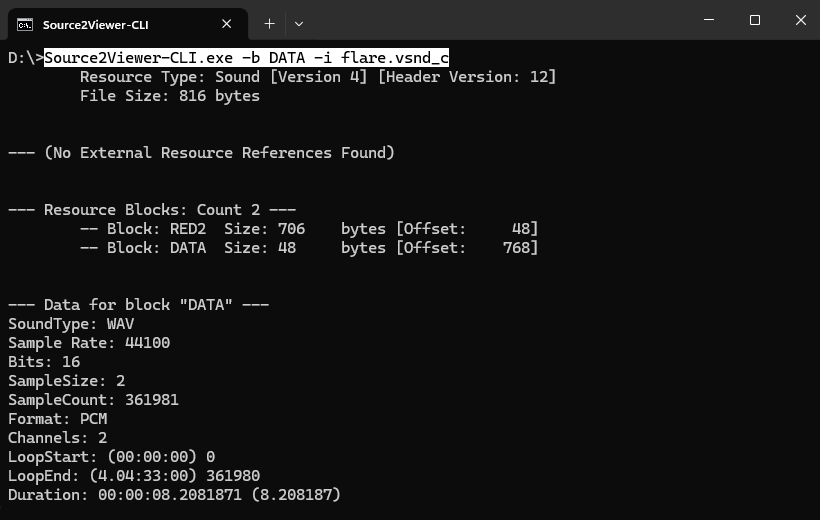
A cross-platform console application that can export and decompile Source 2 resources similar to the main application.

ValveResourceFormat

.NET library that powers Source 2 Viewer (S2V), also known as VRF. This library can be used to open and extract Source 2 resource files programmatically.

ValveResourceFormat.Renderer

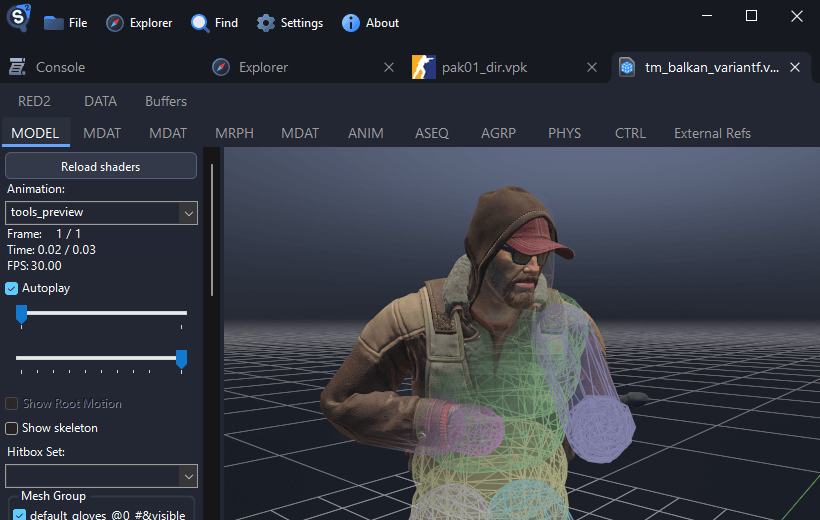
.NET library providing an OpenGL-based rendering engine for Source 2 assets. Standalone rendering of models, maps, particles, animations, lighting, and materials with physically-based rendering (PBR).

ValvePak

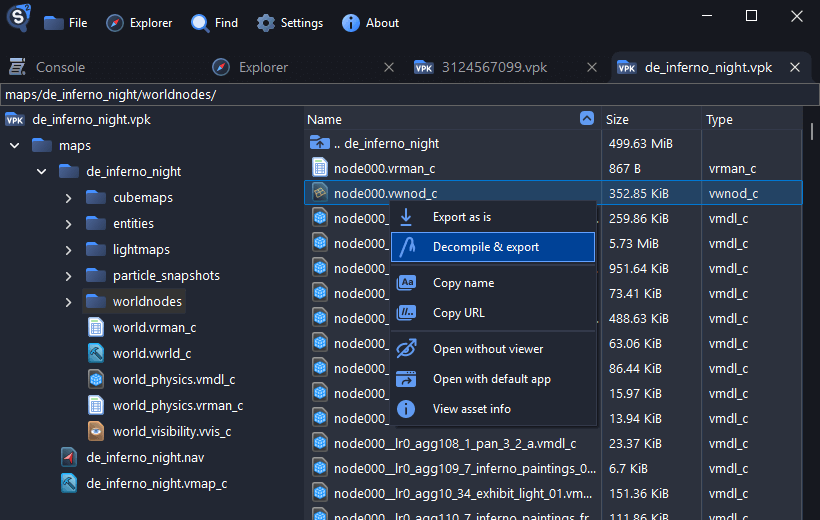
.NET library to read Valve Pak (VPK) archives. VPK files are uncompressed archives used to package game content. This library allows you to read and extract files out of these paks.

ValveKeyValue

.NET library to read and write files in Valve key value format. This library aims to be fully compatible with Valve's various implementations of KeyValues format parsing.

C#
// Open package and read a file
using var package = new Package();
package.Read("pak01_dir.vpk");

var packageEntry = package.FindEntry("textures/debug.vtex_c");
package.ReadEntry(packageEntry, out var rawFile);

// Read file as a resource
using var ms = new MemoryStream(rawFile);
using var resource = new Resource();
resource.Read(ms);

Debug.Assert(resource.ResourceType == ResourceType.Texture);

// Get a png from the texture
var texture = (Texture)resource.DataBlock;
using var bitmap = texture.GenerateBitmap();
var png = TextureExtract.ToPngImage(bitmap);

File.WriteAllBytes("image.png", png);
View API documentation
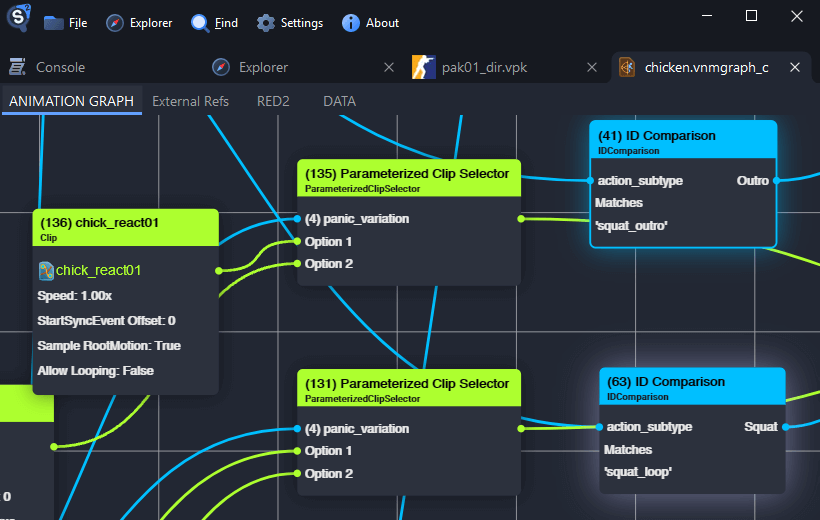
Screenshot of the 3D renderer displaying a Counter-Strike 2 player model on a grid Screenshot showing the VPK package explorer interface with a file tree and a list view Screenshot of the animation graph viewer showing nodes Screenshot of the command line interface showing DATA block for an audio file

Creating a "speed hack" depends on whether you are working in

Conclusion

Speed hack Lua scripts represent a complex issue within the gaming community, touching on aspects of game customization, fair play, and the ethical use of technology. While these scripts can offer a seemingly enhanced gaming experience, their use undermines the efforts of game developers to create balanced and enjoyable experiences for all players. As the gaming industry continues to evolve, the dialogue between developers and players about game integrity, community standards, and the role of scripting in games will remain crucial. Ultimately, fostering a community that values fair play and respects game boundaries will be essential in ensuring that games remain enjoyable and engaging for everyone involved.

If you’re interested in Lua scripting for legitimate purposes — such as automation in Roblox game development, modding single-player games with permission, or writing plugins for editors like WoW or Tabletop Simulator — I’d be happy to help you learn the language and create useful, rule-abiding scripts instead. Let me know what your actual goal is, and I’ll provide a safe and constructive tutorial.

Driven by curiosity and ambition, Alex decided to embark on a quest to find this script. He encountered numerous challenges along the way, from deciphering ancient coding languages to navigating the dark corners of the internet. His journey took him through forums, GitHub repositories, and secret Discord servers, each step leading him closer to his goal.

local player = game.Players.LocalPlayer local character = player.Character or player.CharacterAdded:Wait() local humanoid = character:WaitForChild("Humanoid") humanoid.WalkSpeed = 50 -- Default is 16 Use code with caution. Copied to clipboard
Changelog

Made possible by amazing people

Source 2 Viewer is open-source and built by volunteers. Every contribution helps make it better for everyone.