Open source RGB lighting control that doesn't depend on manufacturer software


One of the biggest complaints about RGB is the software ecosystem surrounding it. Every manufacturer has their own app, their own brand, their own style. If you want to mix and match devices, you end up with a ton of conflicting, functionally identical apps competing for your background resources. On top of that, these apps are proprietary and Windows-only. Some even require online accounts. What if there was a way to control all of your RGB devices from a single app, on both Windows and Linux, without any nonsense? That is what OpenRGB sets out to achieve. One app to rule them all.


Version 1.0rc2, additional downloads and versions on Releases page

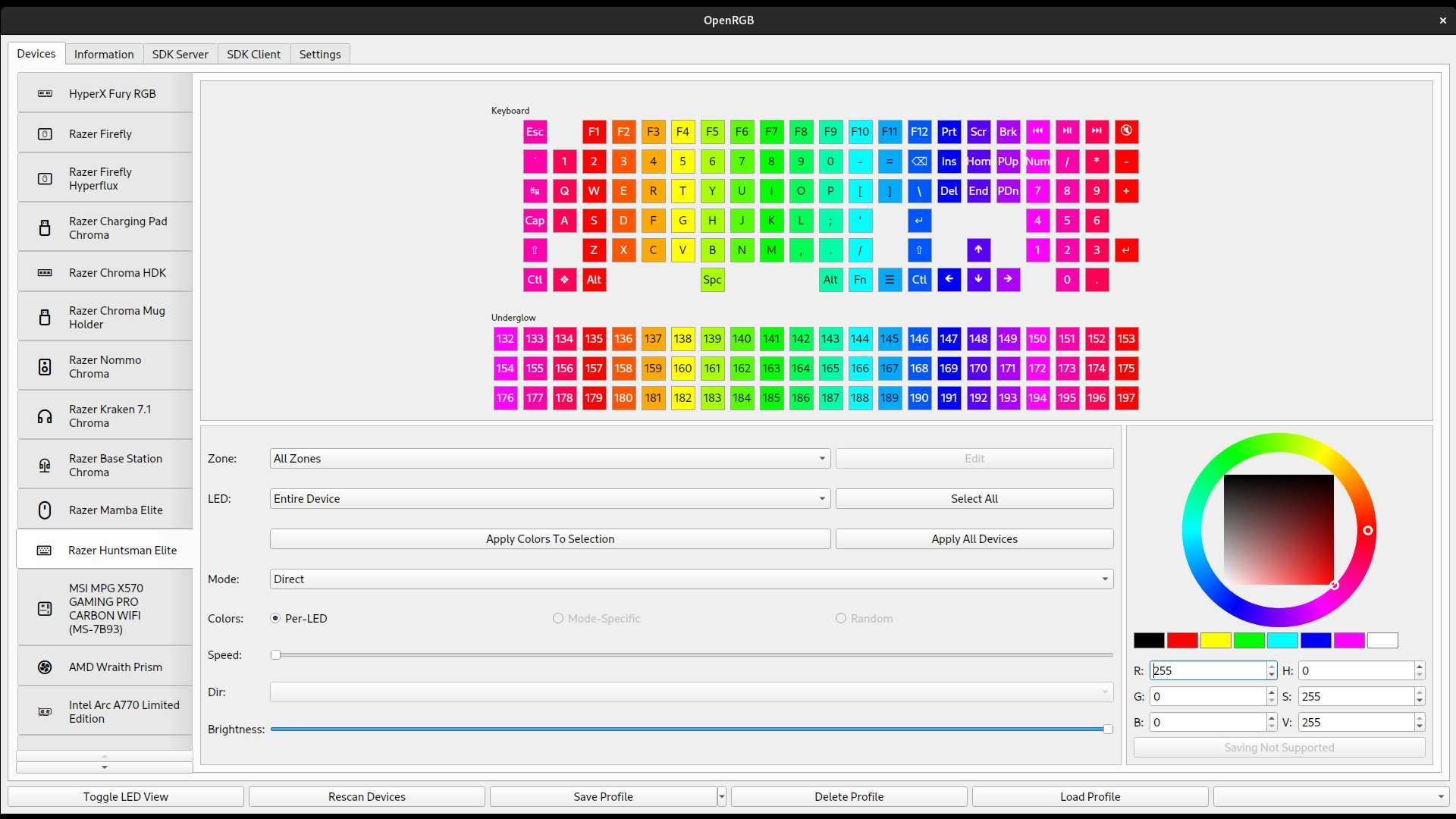
OpenRGB user interface

Control RGB without wasting system resources

Lightweight User Interface

OpenRGB keeps it simple with a lightweight user interface that doesn't waste background resources with excessive custom images and styles. It is light on both RAM and CPU usage, so your system can continue to shine without cutting into your gaming or productivity performance.
OpenRGB rules them all

Control RGB from a single app

Eliminate Bloatware

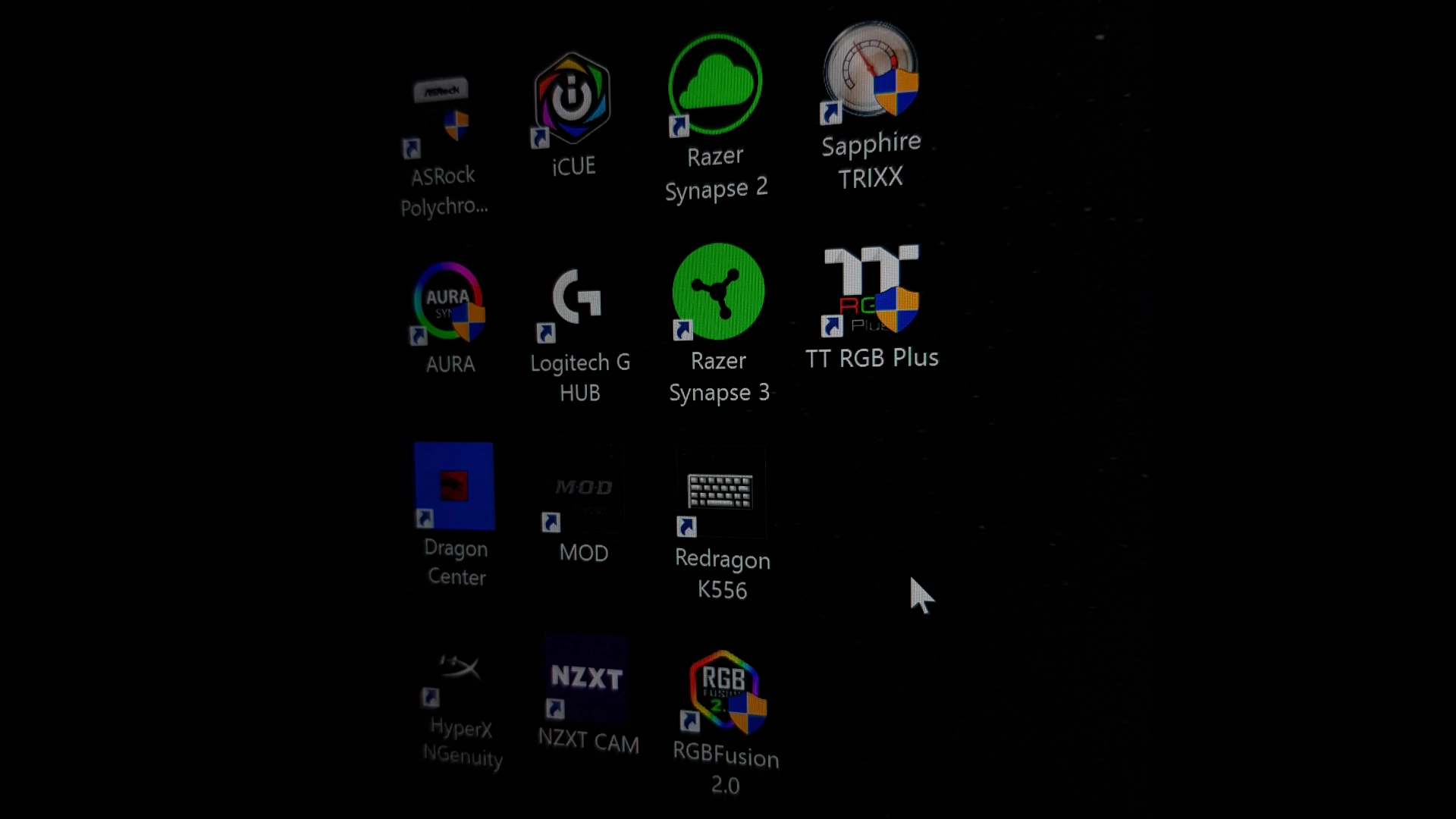
If you have RGB devices from many different manufacturers, you will likely have many different programs installed to control all of your devices. These programs do not sync with each other, and they all compete for your system resources. OpenRGB aims to replace every single piece of proprietary RGB software with one lightweight app.

OpenRGB is open source software

Contribute your RGB devices

Open Source

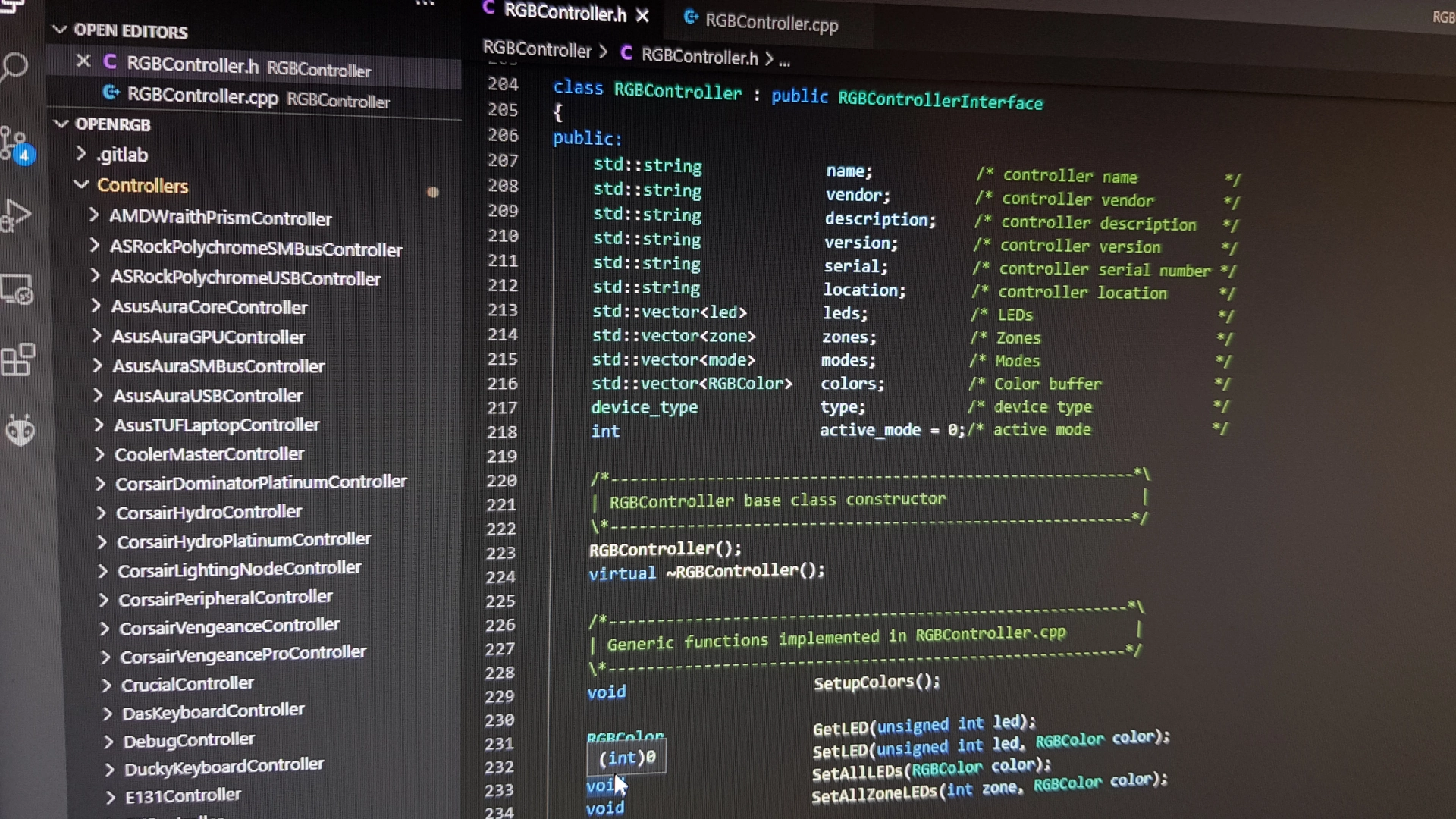
OpenRGB is free and open source software under the GNU General Public License version 2. This means anyone is free to view and modify the code. If you know C++, you can add your own device with our flexible RGB hardware abstraction layer. Being open source means more devices are constantly being added!


Check out the source code on GitLab
OpenRGB is Cross-Platform

Control RGB on Windows, Linux, and MacOS

Cross-Platform

OpenRGB runs on Windows, Linux and MacOS. No longer is RGB control a Windows-exclusive feature! OpenRGB has been tested on X86, X86_64, ARM32, and ARM64 processors including ARM mini-PCs such as the Raspberry Pi.

Mcl Anbu Tamil Font Better May 2026

Informative Report: MCL ANBU Tamil Font

1. Introduction

MCL ANBU is a popular and widely used Tamil Unicode font. Developed by the MCL (Malaysian Christian Lawyers) group, it is recognized for its clean, rounded, and highly legible design. The name "ANBU" (அன்பு) means "Love" in Tamil, reflecting the font's approachable and warm visual character.

Versatility: Ideal for headers, posters, wedding invitations, and creative graphic design in tools like Photoshop. mcl anbu tamil font

Title Design: For YouTube thumbnails or movie posters, it provides a strong, cultural identity. Pro-Tip: Making it Work in Your Software Informative Report: MCL ANBU Tamil Font 1

characterized by bold strokes and a modern aesthetic, making it ideal for headlines, posters, and YouTube thumbnails rather than body text. Glyph Richness Readability: Optimized for body text at small sizes

Latha is a typeface designed for typesetting the Tamil language, using the Tamil script. Adobe Fonts Kavivanar - Google Fonts

Design objectives and tone

in English, it is designed to be easy on the eyes for long-form reading in print. into the MCL Anbu format?

The Legacy Era (1990s–2010s)

During the early days of Tamil computing, there was no universal standard. Different foundries created their own encoding systems. MCL ANBU was built on a non-Unicode (ASCII-based) encoding system. This meant: